

Testing
Orbit tests are ordinary pytest. You do not need a running panel to prove a resource’s form, table, or page host is wired the way you think. Reach for a browser only when you care about Alpine clicks and Conduit round trips.
LiveResource
Section titled “LiveResource”LiveResource is a tiny double around a resource class. It builds the form and table once and asserts on their shape.
from almasix.orbit.testing import LiveResource
from app.orbit.resources.post_resource import PostResource

def test_post_resource():    live = LiveResource(PostResource)
    live.assert_form_has_field("title")    live.assert_table_has_column("title")
    errors = live.fill_form({})    assert "title" in errors
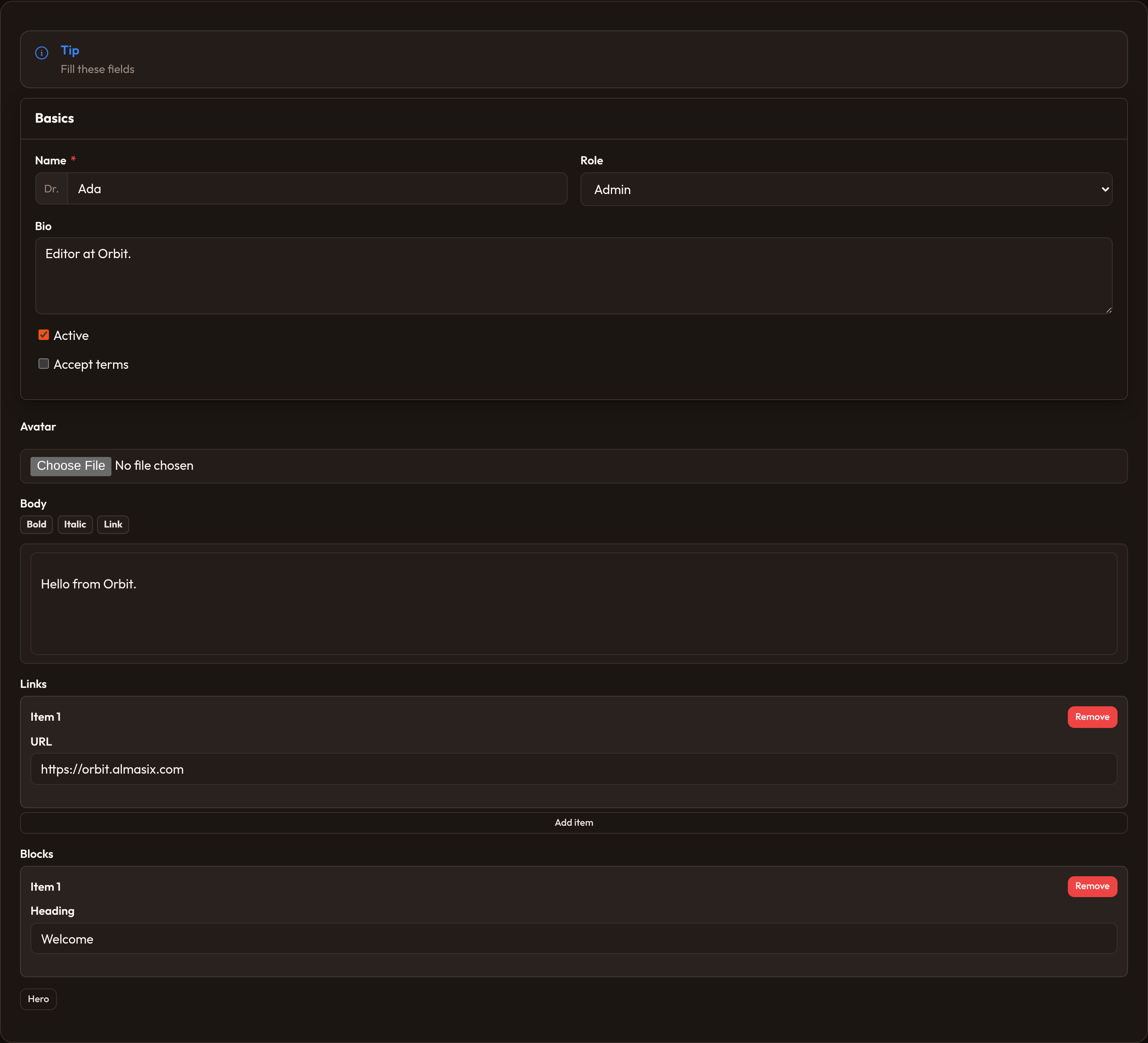
    errors = live.fill_form({"title": "Hello", "slug": "hello"})    assert errors == {}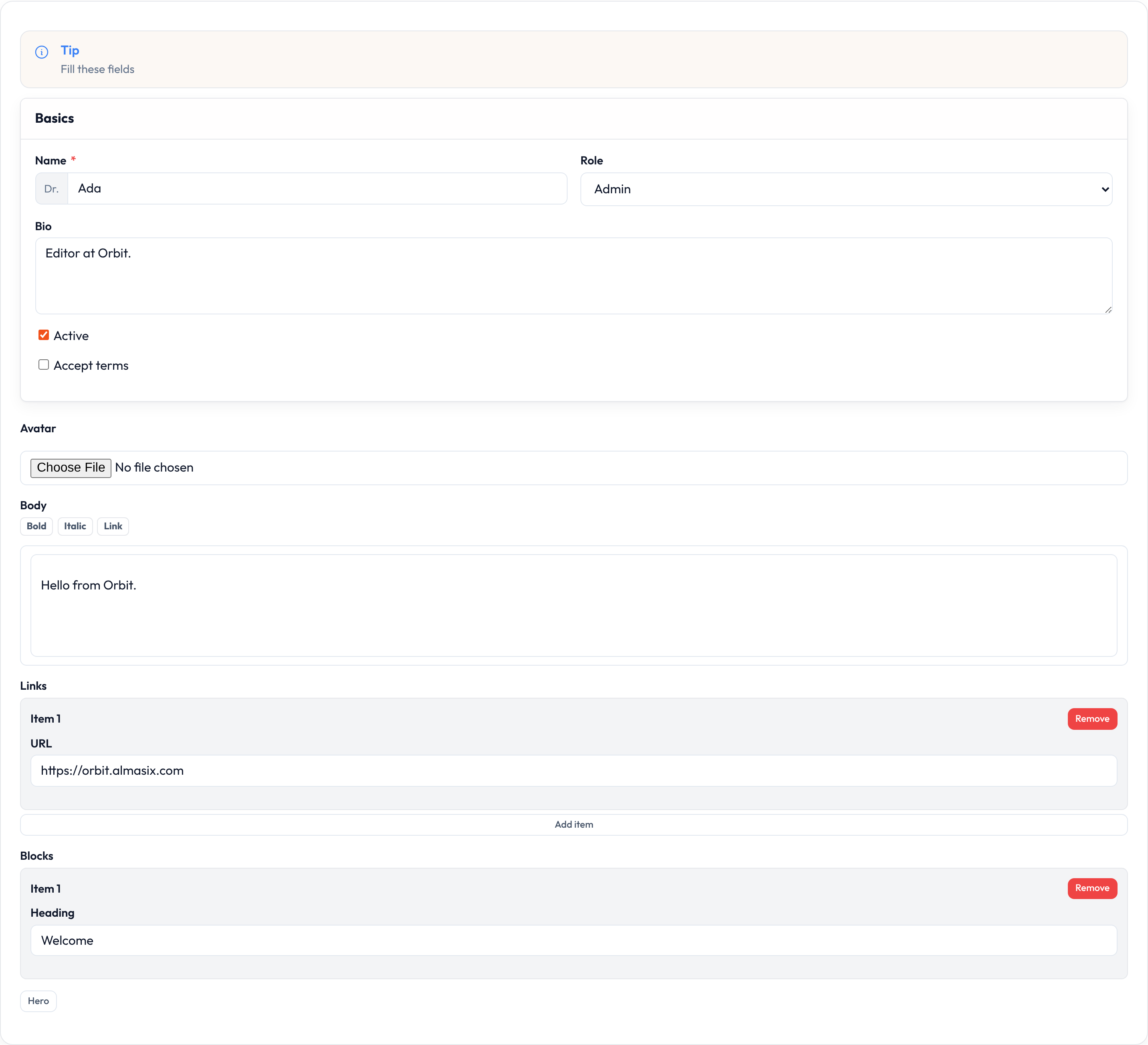
Import from almasix.orbit.testing — it is not re-exported on the top-level almasix.orbit package.
What it does
Section titled “What it does”| Method | Behaviour |
|---|---|
form() |
resource.get_form() |
table() |
resource.get_table() |
assert_form_has_field(name) |
name is in form.get_components() |
assert_table_has_column(name) |
name is in the table’s columns |
fill_form(data) |
form.fill(data) then form.validate(data) — returns the error map |
fill_form is the cheapest way to prove required fields and custom rules fire. Nested repeaters and relationship fields still validate through the same Form.validate path.
HTML smoke tests
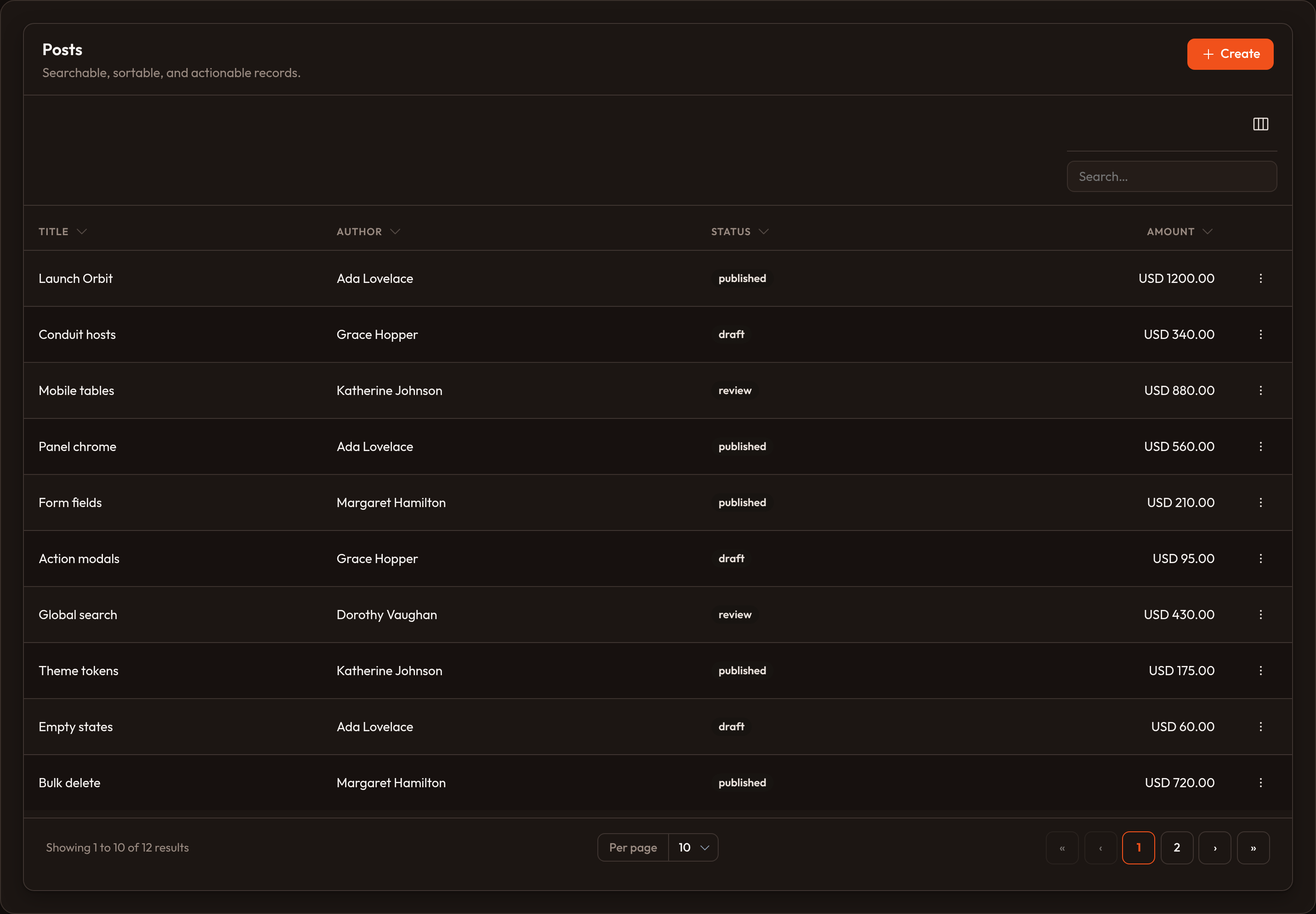
Section titled “HTML smoke tests”Call .render() on forms, tables, infolists, and page hosts and assert on Orbit’s .or-* classes. This catches missing labels, empty schemas, and layout regressions without Playwright.
from almasix.orbit.panels.pages import ListRecords, CreateRecord, ViewRecord
from app.orbit.resources.post_resource import PostResource

class PostList(ListRecords):    resource = PostResource

class PostCreate(CreateRecord):    resource = PostResource

class PostView(ViewRecord):    resource = PostResource

def test_list_renders_table():    html = PostList.render(records=[{"id": 1, "title": "Hello"}])    assert "or-table" in html    assert "Hello" in html

def test_create_renders_form():    html = PostCreate.render(state={"title": ""})    assert "or-form" in html    assert 'name="title"' in html or "title" in html

def test_view_renders_infolist():    html = PostView.render(record={"id": 1, "title": "Hello", "slug": "hello"})    assert "or-page-view" in html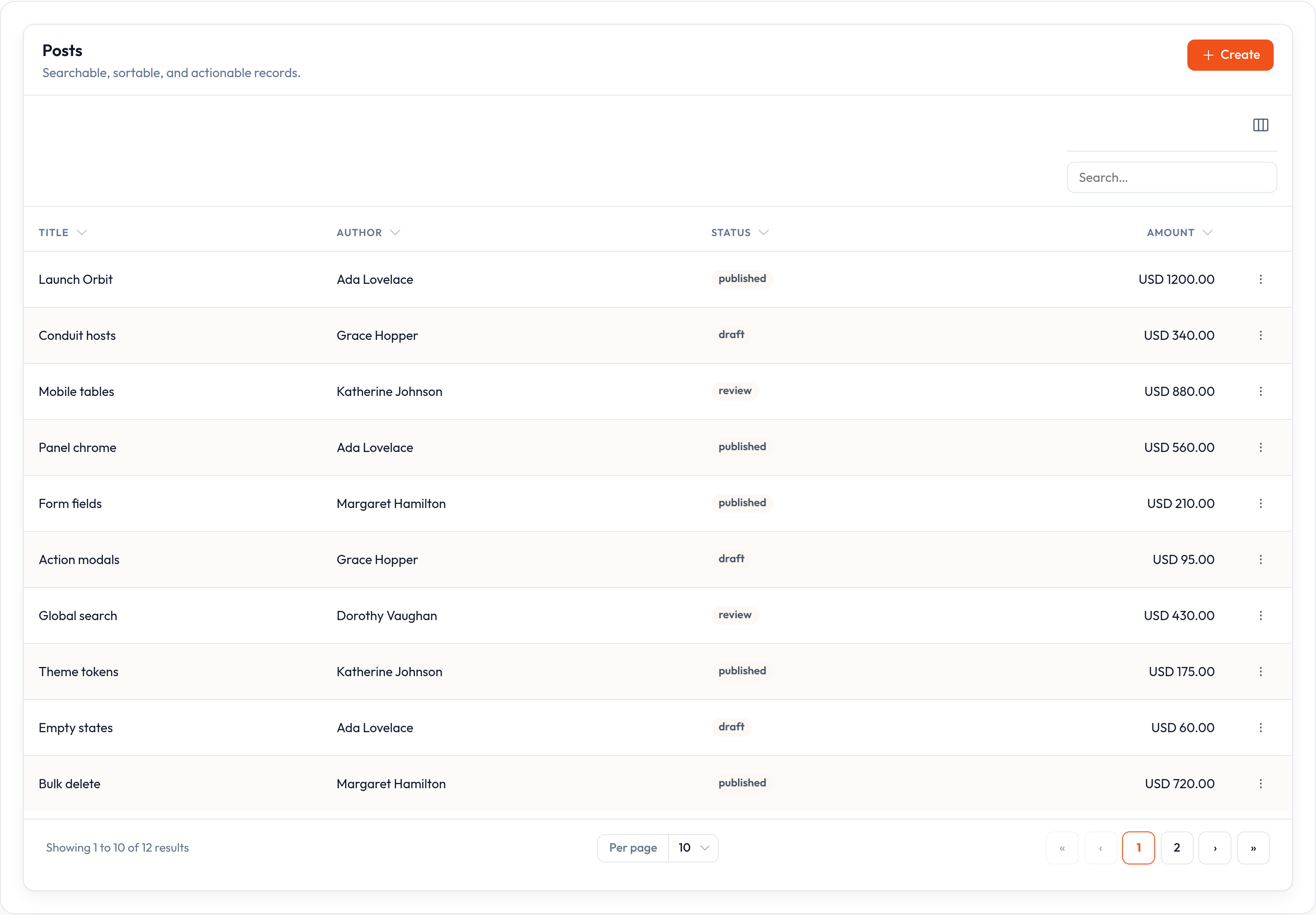
Keep resource classes free of request objects so these checks stay unit tests. Pass user=... or operation="create" in **ctx when a field’s .visible() / .disabled() closure needs it.
Permissions
Section titled “Permissions”Resource.can_view_any, can_create, can_update, and can_delete are plain callables. Fixture a user and assert:
def test_editors_can_update(editor, post):    assert PostResource.can_update(editor, post)

def test_guests_cannot_delete(guest, post):    assert not PostResource.can_delete(guest, post)
Action authorization is the same idea: .authorize(...) plus .can(**ctx) — see Actions.
Notifications
Section titled “Notifications”Flash toasts are in-memory until you persist them. In a test, send through Notifier and assert on get_notifications() (or your store):
from almasix.orbit.notifications import Notification, get_notifier

def test_created_toast():    notifier = get_notifier()    notifier.send(Notification.make(title="Post created").success())    titles = [n.title for n in notifier.peek_flash()]    assert "Post created" in titles
Database and live adapters have their own stores — see Database notifications and Broadcast notifications.
- Prefer
LiveResourcefor schema shape; prefer.render()for chrome; prefer HTTP tests for hosts that mutate records. - Reset process-global registries (
clear_render_hooks(), notification store, broadcast hub) insetup_functionwhen tests share a process. - Pair with Almasix’s HTTP and console guides in the framework testing docs.