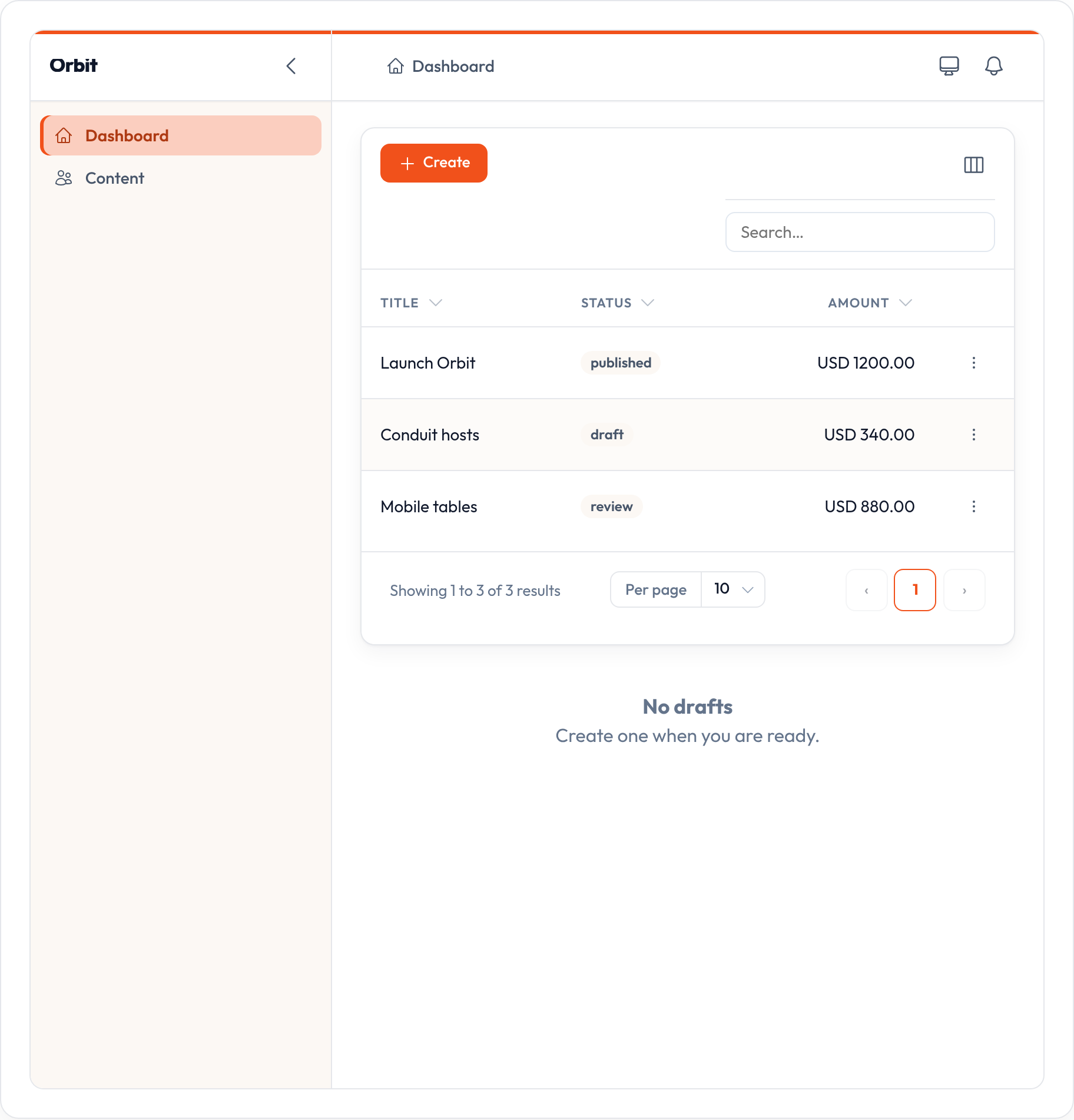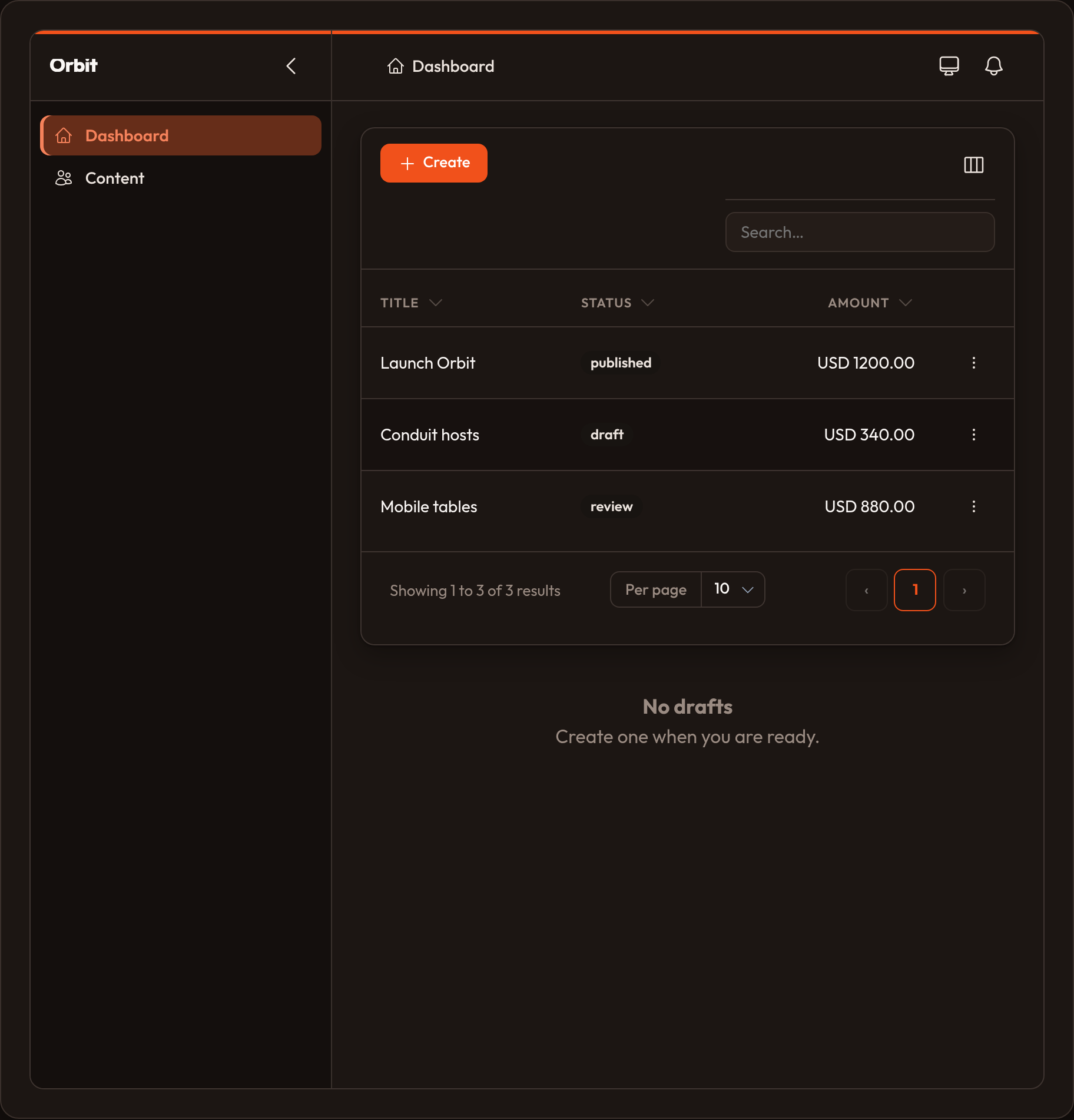

Panel configuration
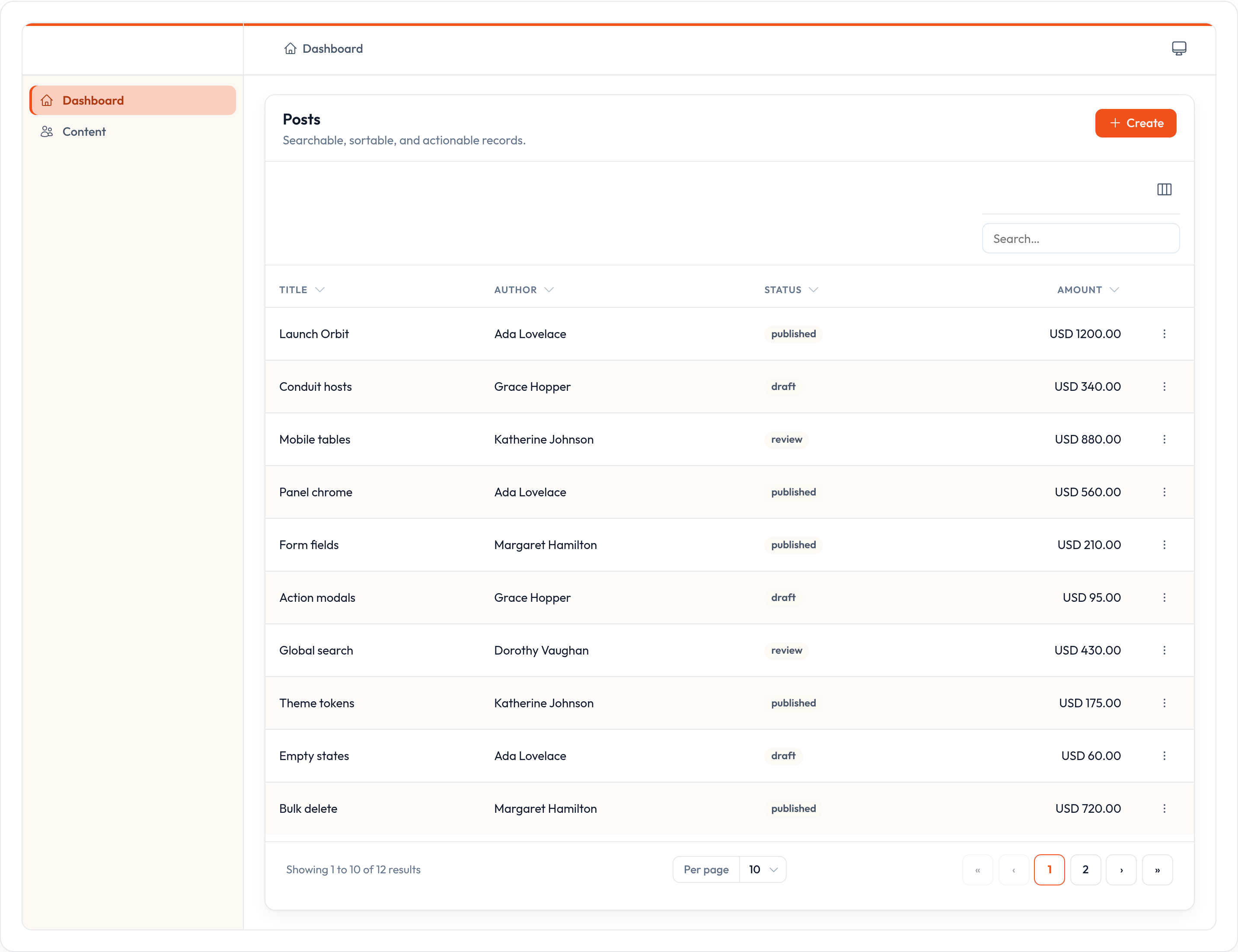
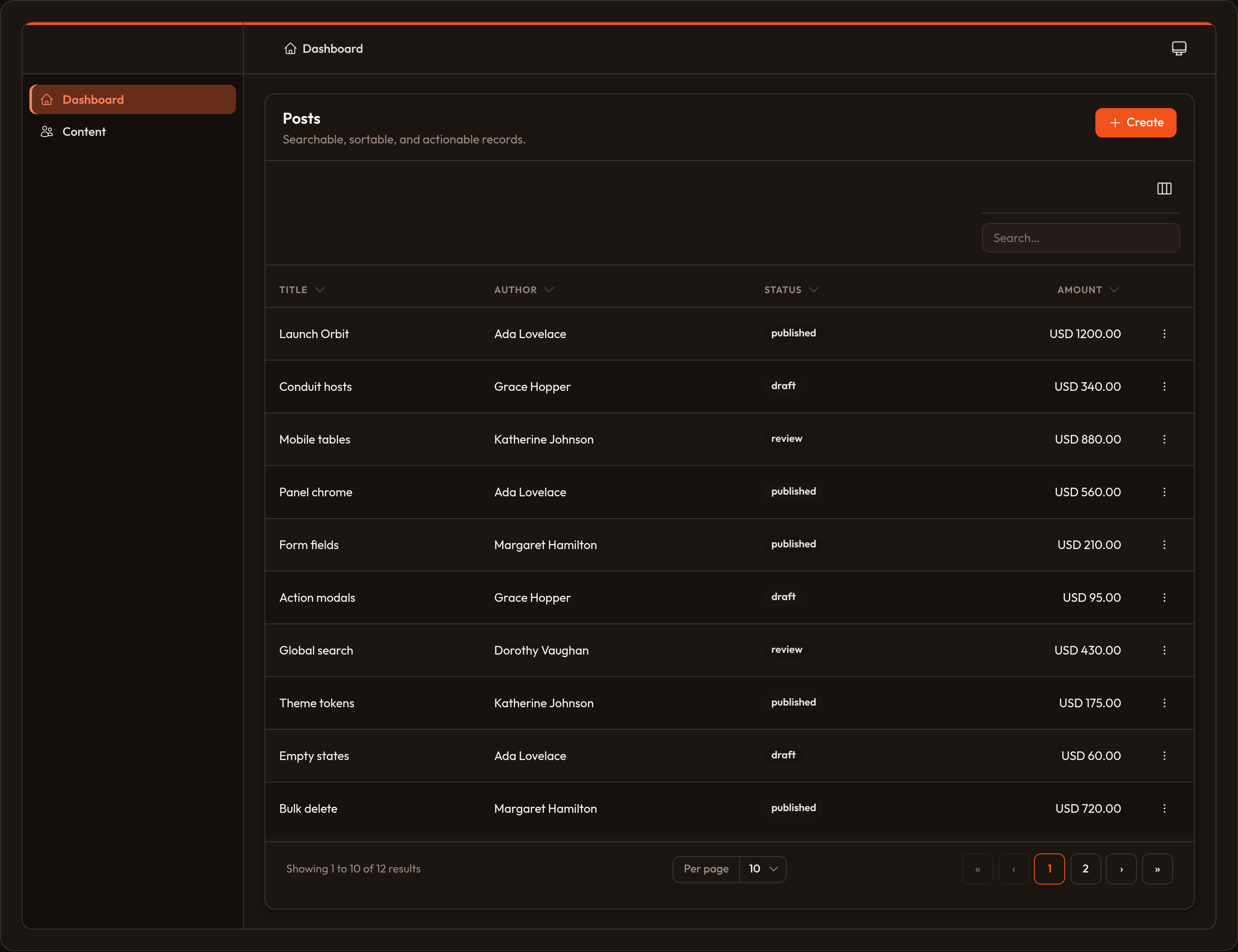
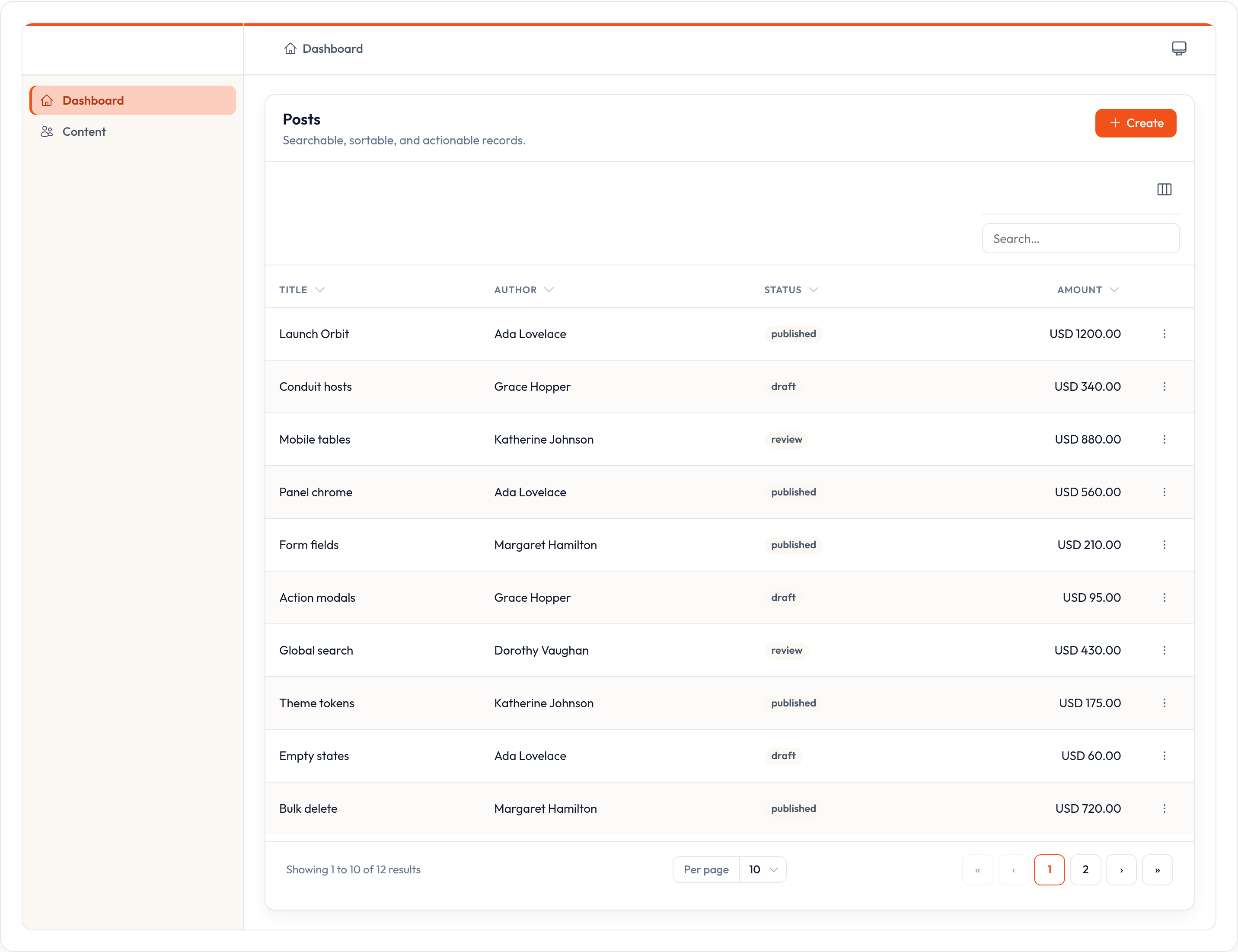
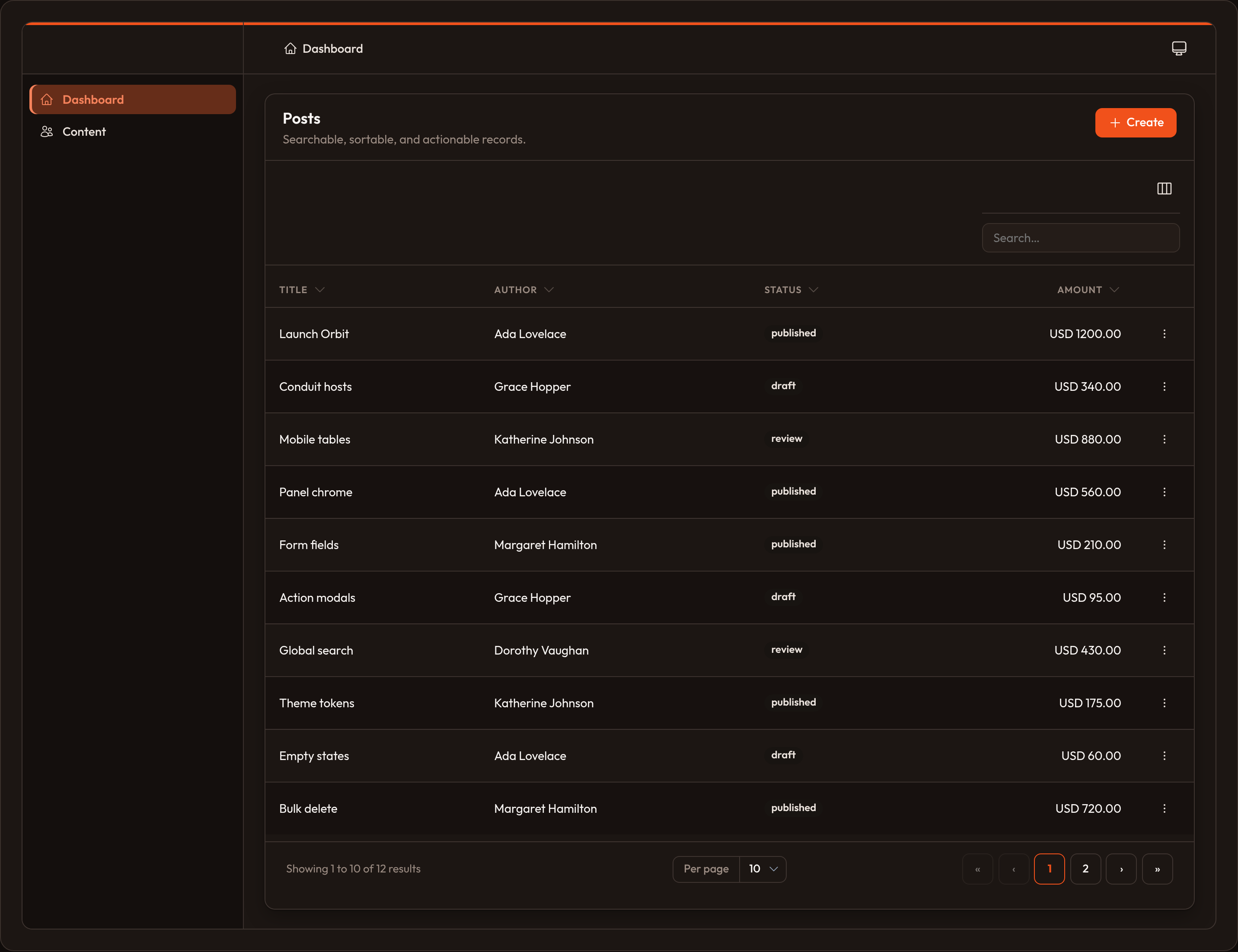
A panel is the admin shell for your app: brand, URL path, navigation, middleware, and the list of resources / pages / widgets it owns. One Almasix app can register several panels (for example admin and docs) with different paths and contents.
Where panels live
Section titled “Where panels live”After orbit:install, configure panels in app/orbit/{id}/panel.py. Components for that panel live beside it under resources/, pages/, widgets/, and themes/. The app’s OrbitPanelProvider only discovers panel packages — it should not contain Panel.make(...). Full layout: Installation.
from almasix.orbit import Panel, PanelRegistry, Pluginfrom almasix.orbit.panels.hooks import register_render_hook

def register_admin_panel(registry: PanelRegistry) -> Panel:    panel = (        Panel.make("admin")        .default()        .path("orbit")                 # or .path("") / .path("/") for the site root        # .domain("admin.example.com") # optional host binding        .brand_name("Acme Admin")        .brand_logo("/images/logo.svg")  # or asset("images/logo.svg") / "https://…"        .brand_logo_dark("/images/logo-dark.svg")  # optional; falls back to light        .brand_logo_height("2.25rem")        # .brand_logo_only()        # .brand_name_font_size("2rem")        .favicon("images/favicon.svg")        .font("Outfit")        .primary("#f1511b")  # or .primary("info") / .colors(primary="#…", danger="#…")        .content_max_width("screen-2xl")        .simple_page_max_content_width("md")  # login / register bare shell        .resources([PostResource, UserResource])        .widgets([StatsOverview])        # .middleware(["auth"])  # appends after default ["web"]        # .auth_middleware(["auth"])  # authenticated routes only        .login()                 # or .login(False) / .login(MyLogin)        # .signup()              # opt-in registration (+ link on the login page)        # .dashboard()           # on by default; .dashboard(False) or .dashboard(MyDashboard)        .auth_guard("web")        .dark_mode()        .theme_switcher()        .default_theme_mode("system")  # light | dark | system        .sidebar_collapsible()        # .home_url("/welcome")        # .breadcrumbs_enabled(False)        .discover_panel_dirs()   # resources|pages|widgets + themes/*.css    )    registry.register(panel)    return panel
Identity
Section titled “Identity”| Method | Default | Notes |
|---|---|---|
Panel.make(id) |
"admin" |
Registry key via panel.id |
.default() |
False |
Mark as the app default (PanelRegistry.get_default()) |
.path(...) |
/{id} |
Leading / is added if missing; "" or "/" mounts at root |
.domain(...) |
None |
Host binding passed to Almasix Router.add(domain=…) |
.home_url(...) |
panel root | Brand link + breadcrumb home override |
.favicon(...) |
None |
<link rel="icon"> in the shell head |
.brand_name(...) |
"Orbit" |
Document title; shown next to the logo unless logo-only |
.brand_logo(...) |
None |
Light logo. Accepts asset(...), absolute URLs, or bare relatives (resolved with url()). Optional dark= kwarg. |
.brand_logo_dark(...) |
light logo | Dark-mode logo; falls back to the light logo when unset |
.brand_logo_height(...) |
"2rem" |
CSS height (--or-brand-logo-height) |
.brand_logo_only() |
False |
Hide the brand name when a logo is set |
.brand_name_font_size(...) |
"1.8rem" |
Font size for the visible brand name (shell + login). Any CSS length |
.font(...) |
"Outfit" |
Shell typography |
.primary(...) |
"#f1511b" |
Brand primary (hex or semantic token like "info"). Soft/deep accents derive automatically |
.colors(**tokens) |
primary="#f1511b" |
Merge semantic colors (primary, danger, success, warning, info, gray). Values may be hex or tokens |
.content_max_width(...) |
"screen-2xl" |
Cap centered page content (screen-2xl → 96rem) |
.simple_page_max_content_width(...) |
"lg" |
Max width for bare auth pages |
Toggle-style methods take condition: bool = True (e.g. .dark_mode(), .sidebar_collapsible(), .theme_switcher()).
Auth and home pages accept True, False, or a custom Page subclass:
| Value | Meaning |
|---|---|
True / no args |
Use Orbit’s built-in page (Login, Register, or Dashboard) |
False |
Disable that page |
A Page subclass |
Use your custom page instead |
from almasix.orbit import Login, Register, Dashboard
class MyLogin(Login):    title = "Welcome back"
panel.login(MyLogin).signup().dashboard()
Contents
Section titled “Contents”| Method | What it stores |
|---|---|
.resources([...]) |
Resource classes (replaces the list) |
.pages([...]) |
Custom page classes |
.widgets([...]) |
Dashboard widgets |
.middleware([...]) |
Appends after default ["web"] (deduped). Use replace=True to set the stack explicitly |
.auth_middleware([...]) |
Extra middleware on authenticated routes only (not login/register) |
.login(...) |
Default True → built-in Login. Pass False or a custom page class |
.signup(...) |
Default False. Pass True/() for Register, or a custom page. Adds login↔signup links |
.dashboard(...) |
Default True → built-in Dashboard as panel home (/). Pass False to use the first resource instead |
.auth_guard("web") |
Guard name |
.spa() |
Same-document navigation for in-panel links (Alpine fetch + history) |
.spa_url_exceptions(...) |
Paths that always do a full page load (login/logout are excluded automatically) |
.dark_mode() |
Enable dark-mode CSS / preference boot |
.theme_switcher() |
Show the light/dark/system toggle (requires dark mode) |
.default_theme_mode(...) |
"system" / "light" / "dark" when the user has no stored choice |
.sidebar_collapsible() |
Off by default. Pass True (or call with no args) to show the collapse control |
.breadcrumbs_enabled() |
On by default; pass False to hide the trail |
.plugin(...) / .plugins([...]) |
Callable or Plugin instance (register → callbacks → boot). Only way to load plugins — no {id}/plugins autodisc. |
.boot_using(fn) |
Runs after plugins when the panel mounts |
.render_hook(name, fn) |
Panel-scoped HTML injection (see hooks below) |
.theme_package(...) |
Load *.css from dotted packages (also wired by .discover_panel_dirs() → {pkg}.themes) |
.theme_stylesheet(...) |
Extra <link rel="stylesheet"> URLs in the shell head |
Discovery paths
Section titled “Discovery paths”Prefer the colocated helper (scaffolding emits this):
panel = Panel.make("admin").discover_panel_dirs()# → app.orbit.admin.resources|pages|widgets# → theme CSS from app.orbit.admin.themesPut overrides in app/orbit/admin/themes/custom.css (any *.css under themes/). Files are inlined as <style data-orbit-theme="…"> after Orbit’s core CSS.
Shared custom fields live under app/orbit/shared/fields/ (make:orbit-field). Shared resources under app/orbit/shared/resources/ must be registered explicitly on every panel that uses them — they are never auto-discovered.
Or pass directories / packages explicitly. mount_panel calls load_discovered() for you; call it yourself only when you need the classes before mount.
from almasix import app_path# or: from almasix.support import app_path
panel = (    Panel.make("admin")    .discover_resources(app_path("orbit", "admin", "resources"))    .discover_pages("app.orbit.admin.pages")    .discover_widgets("app.orbit.admin.widgets"))
Paths may be:
| Form | Example |
|---|---|
Absolute FS dir (preferred with app_path) |
app_path("orbit", "admin", "resources") |
| Dotted package | "app.orbit.admin.resources" |
| Relative dir (only if it exists vs process cwd) | "app/orbit/admin/resources" |
Discovered classes are merged with any you still register via .resources([...]). Deduplication uses the fully-qualified class name so two panels may each define PostResource.
Plugins and render hooks
Section titled “Plugins and render hooks”from almasix.orbit.panels.hooks import Plugin, PANEL_HOOKS
class BrandingPlugin(Plugin): def __init__(self) -> None: super().__init__("branding")
def register(self, panel: Panel) -> None: panel.favicon("images/favicon.svg")
def boot(self, panel: Panel) -> None: panel.render_hook( "panels::styles.after", lambda **_ctx: "<!-- branding plugin -->\n", )
panel = ( Panel.make("admin") .plugin(BrandingPlugin()) .plugin(lambda p: None) # legacy callable still supported .boot_using(lambda p: None) .render_hook("panels::head.end", lambda **_ctx: '<meta name="orbit" content="1" />\n'))Hooks run at mount via panel.run_plugins() (also called by mount_registered_panels). Common positions live in PANEL_HOOKS (panels::head.*, body.*, sidebar.nav.*, topbar.*, content.*, …).
Full guides: Render hooks, Plugin development.
Registry
Section titled “Registry”registry = app.make(PanelRegistry)registry.register(panel)registry.get("admin") # Panel | Noneregistry.get_default() # panel marked .default(), else first registeredregistry.default("admin") # mark an already-registered panel as defaultregistry.all() # list[Panel]Also look up a panel by path or host when several are registered:
registry.get_by_path("docs") # the panel mounted at /docsregistry.get_by_domain("admin.example.com")Navigation
Section titled “Navigation”items = panel.navigation_items()# [{label, icon, group, subgroup, url, sort}, ...]Items come from each resource and page’s navigation class vars, plus custom NavigationItems, sorted by navigation_sort. Layout helpers: .apps_navigation(), .sidebar_navigation(), .top_navigation() (or .navigation_layout(...)). Full guide: Navigation.
User menu / notifications APIs on Panel are covered under User menu and notifications docs.
Actions on the shell (modal vs URL, mountAction): Panel actions.
The shell
Section titled “The shell”html = panel.render_shell(content_html, user=request.user)You get a full HTML document: sidebar, brand, favicon, theme boot, and links to /vendor/orbit/orbit.css + orbit.js. Pass the authenticated user so permission-aware nav can filter itself. Auth pages use bare=True and .simple_page_max_content_width(...).
Multiple panels
Section titled “Multiple panels”Need a public “docs” panel and a private “admin” panel? Make two IDs, register both, and bind each to a path (and optionally a host). PanelRegistry.get_by_path / get_by_domain resolve the active panel:
Panel.make("admin").default().path("admin").domain("admin.example.com").resources([PostResource])Panel.make("docs").path("docs").resources([ArticleResource]).login(False)See examples/orbit-admin — it registers app (authenticated, /) and docs (guest, /docs).
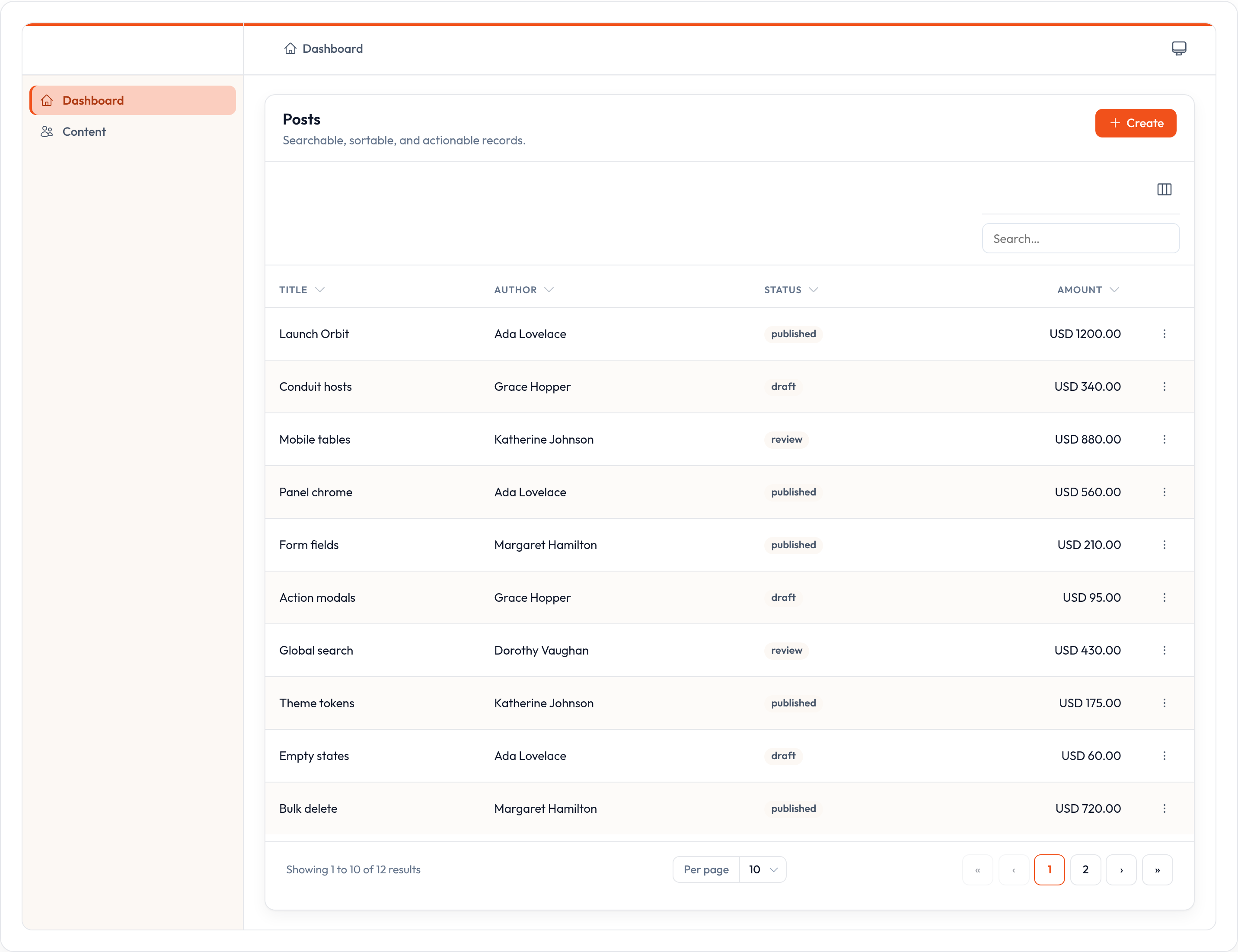
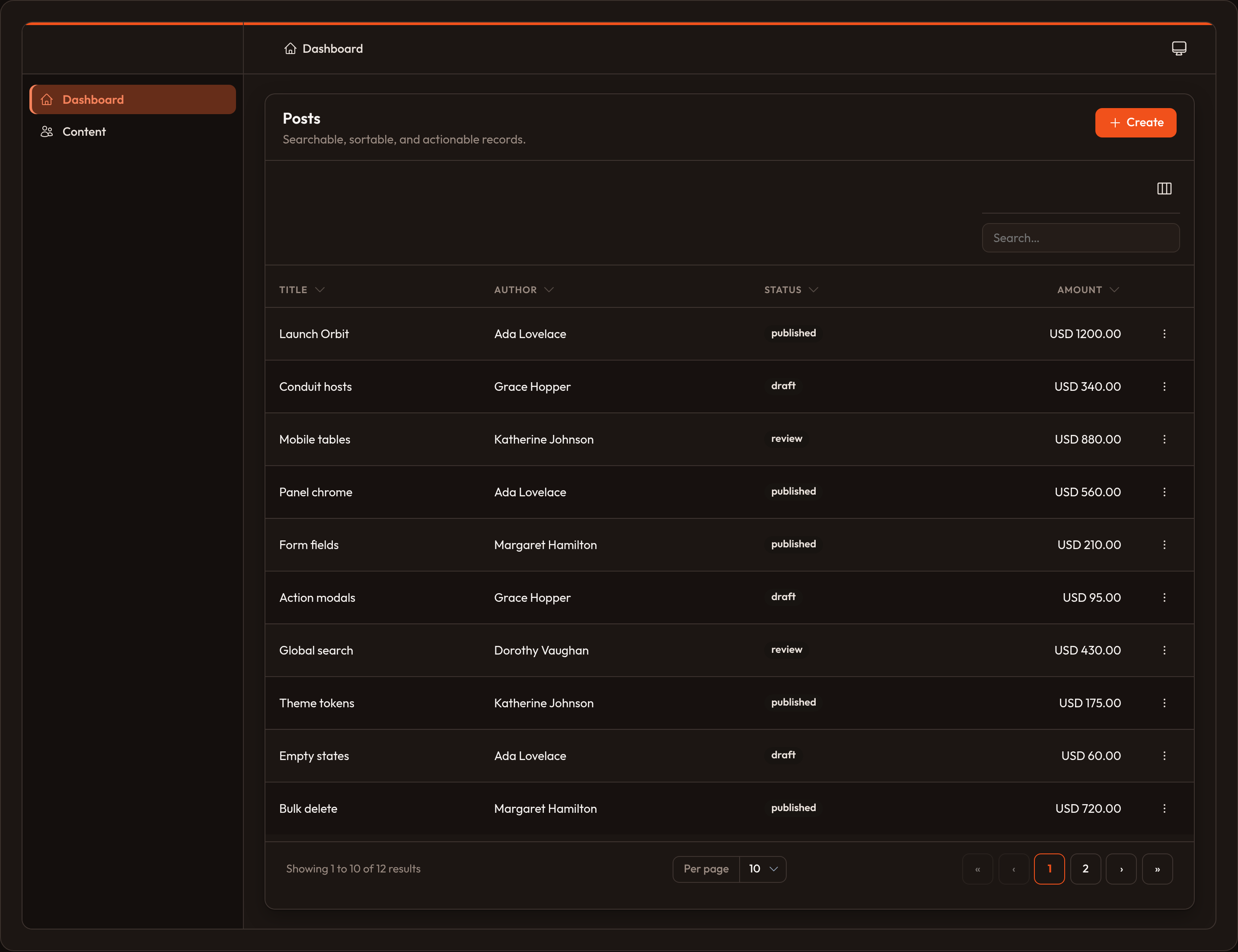
SPA mode
Section titled “SPA mode”.spa() keeps the admin chrome in place and swaps main.or-content when the user clicks an in-panel link. Login, logout, register, and MFA challenge always do a full load. Add extra exceptions with .spa_url_exceptions("/export").
Panel.make("admin").path("admin").spa().spa_url_exceptions("/export", "/download")The shell sets data-orbit-spa="true" on <html>. The Alpine orbitShell component fetches the next URL, replaces the main slot, and pushes history. Dispatch orbit:spa-navigated if you need to re-init widgets.
Billing
Section titled “Billing”Tenant billing is a first-class slot. .tenant_billing(True) mounts ManageBilling at {panel}/billing and installs an in-process MemoryBillingProvider (Starter / Pro plans). Swap in your processor with .billing_provider(...).
from almasix.orbit.panels import BillingPlan, MemoryBillingProvider, Panel
Panel.make("admin")    .path("admin")    .tenant_billing(True)    .billing_provider(        MemoryBillingProvider(            [BillingPlan("pro", "Pro", 2900)],            portal_url="https://billing.example.com",        )    )
Implement plans, current_subscription, subscribe, and portal_url on your own provider when you wire Stripe or a similar API. The page POSTs plan_id back to /billing.
See examples/orbit-admin/app/providers/orbit_panel_provider.py for a live multi-panel + plugin showcase.
Next: Resources.
Preview
Section titled “Preview”