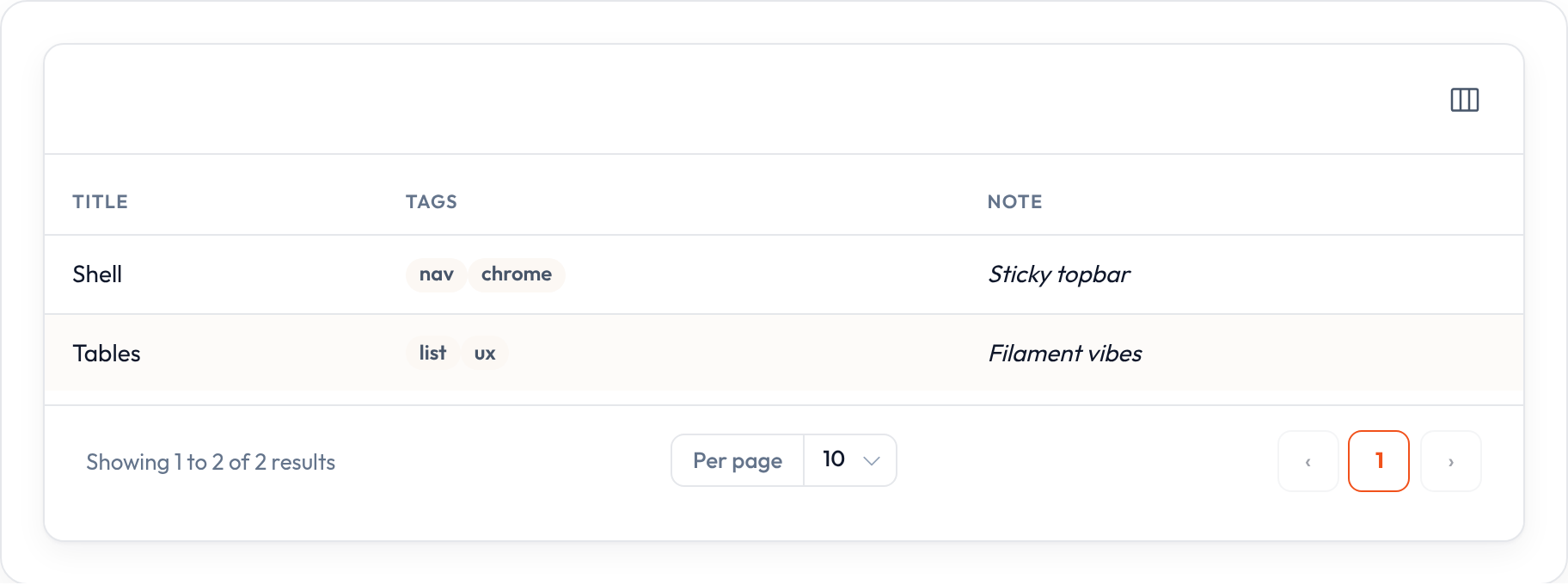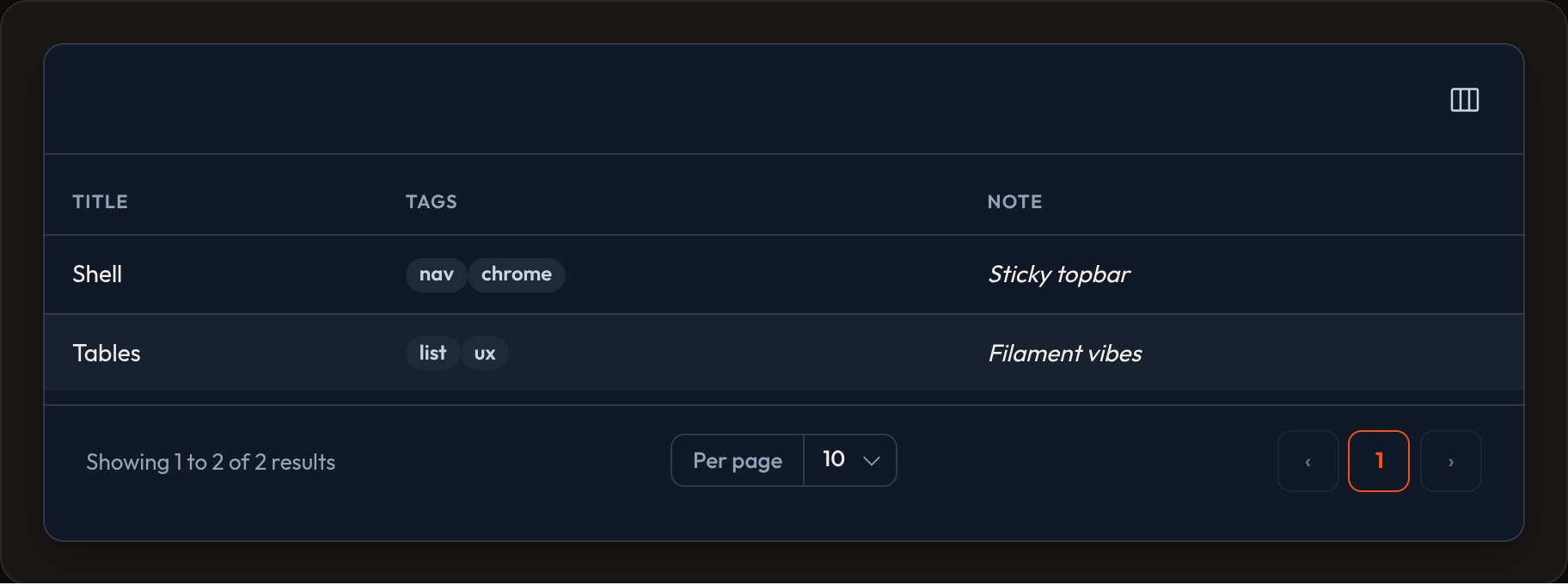

Tags column
TagsColumn takes an iterable of labels (or a comma-separated string) and renders them as or-badge chips. Use it for categories, skills, and other multi-value labels.
Standalone example
Section titled “Standalone example”from almasix.orbit.tables import Table, TextColumn, TagsColumn
table = ( Table.make("articles") .columns([ TextColumn.make("title").searchable().sortable(), TagsColumn.make("tags"), TagsColumn.make("topics"), # also accepts "a, b, c" strings ]) .records([ {"id": 1, "title": "Orbit tables", "tags": ["docs", "ui"], "topics": "python, html"}, {"id": 2, "title": "Conduit hosts", "tags": ["live"], "topics": "conduit"}, ]))In a Resource example
Section titled “In a Resource example”from almasix.orbit import Resourcefrom almasix.orbit.tables import Table, TagsColumn, TextColumn
class ArticleResource(Resource): @classmethod def table(cls, table: Table) -> Table: return table.columns([ TextColumn.make("title").searchable().sortable().weight("bold"), TagsColumn.make("tags").label("Tags"), TextColumn.make("published_at").date("%b %d, %Y"), ])Empty lists render an empty cell. Pair with a TagsInput on the form so create and edit stay in sync with the list.
Key methods
Section titled “Key methods”.label(...)/.align_start()/.toggleable(...).format_state_using(callback)— normalize dicts / objects → strings.sortable()— sorts on the raw state (list/string)
Preview
Section titled “Preview”